

A renewal isn’t just a chance to keep your current premises; it’s a chance to reset the terms around your business needs. Effective lease renewal negotiation strategies start with evidence: commercial leases commonly require written notice 6-12 months before expiry, so review your agreement early and build time to negotiate.
It’s understandable to focus first on rent. But your total occupancy cost also depends on how much space you use, what improvements the premises need, and what incentives the landlord may offer to retain you. A lower headline rent is only one part of a stronger deal.
This guide explains how to compare properties, assess your space needs, negotiate improvement allowances and landlord incentives, and review renewal clauses before signing. Use it to weigh renewal against relocation and seek terms that better support your operational and financial priorities in Poland.
Key Takeaways
- Use comparable properties and credible alternatives to support a renewal proposal, while keeping the terms you compare consistent.
- Define the improvements your workplace needs so you can negotiate an allowance that supports your space configuration and technology requirements.
- Assess future space requirements and consider whether returning unused area could reduce occupancy costs.
- Frame your proposal around the value of retaining your tenancy, including the costs and disruption a vacancy may create for the landlord.
- Review renewal deadlines, automatic renewal language, and renegotiation rights before agreeing to new terms.
1. Using market availability and comparable properties as leverage
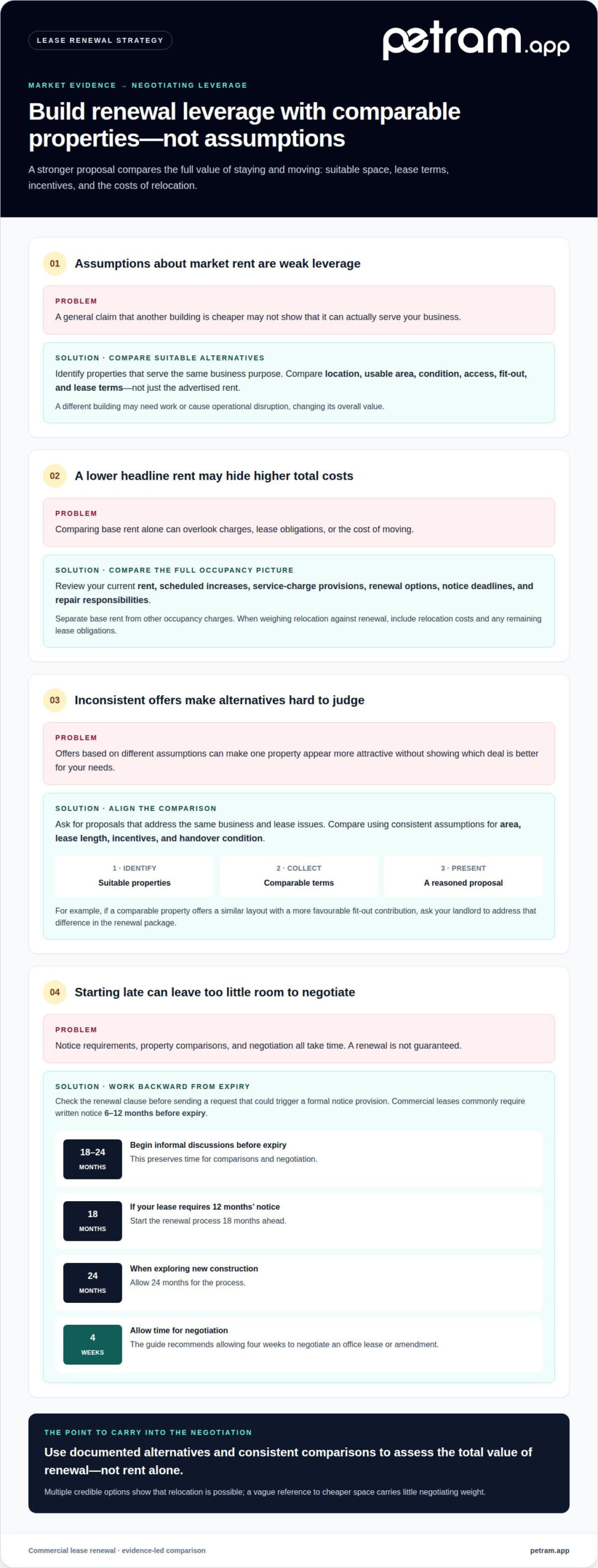
The strongest lease renewal negotiation strategies start with credible alternatives, not assumptions about market rent. Compare suitable commercial properties by location, usable area, condition, access, fit-out, and lease terms. A different building may appear cheaper, but required work or operational disruption can change its overall value.
Review your lease and record the current rent, scheduled increases, service-charge provisions, renewal options, notice deadlines, and repair responsibilities. Compare these terms with rents for properties that serve the same business purpose. Separate base rent from other occupancy charges so a lower headline figure doesn’t hide higher total costs.
Market conditions can strengthen your position when suitable space is available. Identify specific alternatives and request proposals that address the same business and lease issues as your landlord’s offer. Compare responses using consistent assumptions, including area, lease length, incentives, and handover condition. Multiple credible options show that relocation is possible; a vague reference to cheaper space carries little negotiating weight.
Timing matters. Commercial lease clauses commonly require written renewal notice 6-12 months before the current lease expires. Begin informal discussions 18-24 months before expiry to preserve time for comparisons and negotiation. If your lease requires 12 months’ notice, start the renewal process 18 months ahead; allow 24 months when exploring new construction. Review the clause before sending any request that could trigger a formal notice provision.
Use a clear process: identify suitable properties, collect comparable terms, then present a reasoned proposal. For example, if another property offers a similar layout with a more favourable fit-out contribution, ask your landlord to address that difference in the renewal package. Compare total occupancy value, not rent alone. Include relocation costs and any remaining lease obligations when weighing a move against renewal.
Lease renewal negotiation strategies work best when your proposal reflects market evidence and business priorities. Allow four weeks to negotiate an office lease or amendment, and don’t assume renewal is guaranteed. A documented alternative gives the landlord a reason to respond competitively and helps you assess whether a proposed increase reflects market value or carries forward outdated terms.
2. Tenant improvement allowances
A renewal can fund changes that make your premises work better for your operations. Before discussing an allowance, define what the space needs: employee amenities, office configuration, and technology infrastructure. Separate essential upgrades from desirable additions. For example, a revised layout may address team capacity, while updated cabling may support workplace technology. A clear scope gives the landlord a specific proposal to assess.
Turn that scope into negotiable terms. Describe the work, who approves it, how costs are documented, and when the allowance is available. Clarify whether it covers construction, fixtures, or technology-related work, and how unused funds are treated. These details affect its practical value. A headline figure is less useful if eligible work excludes improvements your business needs.
Your negotiating position depends on the strength of your business case and the landlord’s incentive to retain you. A tenant with a clear long-term occupancy plan can explain how improvements support continued use of the premises. The landlord may be willing to cover some costs of updating your space to retain you. Present the proposed work alongside its operational benefit, such as improving office functionality or meeting employee amenity needs.
Existing tenants have advantages and constraints. You already occupy the space, so the landlord can assess the proposed work in context. However, the premises’ condition, the scope of changes, and your lease terms shape what can be agreed. Document current limitations and connect each requested improvement to a business need. If the landlord resists funding, negotiate another element, such as approval procedures or timing, rather than treating the allowance as the only possible benefit.
A tenant representative can help structure the proposal when you lack market experience or time to manage negotiations. A commercial lease broker should understand your situation and business objectives before recommending an approach. Share your space plan, improvement priorities, and preferred renewal terms so the representative can evaluate the full package. Keep the decision criteria specific: which work is essential, which terms affect delivery, and what outcome makes renewal operationally viable. For portfolio teams seeking a more organized view of commercial property operations, digital tools for commercial real estate workflows can support a more structured management approach.
3. Reducing rent and giving back unused space
Base rent is only one part of the occupancy decision. Project your space requirements across the next 3-5 years, including planned hiring, hybrid work, storage, and operational changes. Then compare expected use with the area in your lease. A tenant occupying more space than its forecast requires can negotiate a smaller footprint, a rent reduction, or the right to return part of the premises. A precise plan gives the landlord a concrete proposal before expiration.
Measure the operational impact before requesting a reduction. Identify which spaces remain essential, which are consistently underused, and whether teams can share facilities without disrupting work. Some tenants may have 20% or more office space than they need, so assess your own portfolio rather than assuming the same proportion applies. Map the proposed retained area and any space to surrender, then explain how the revised layout supports business needs.
Returning space can also create an opportunity to reset its rent. In a JLL client case, a tenant returned part of its unused space at a rate 15% lower than the rate originally negotiated. Use this as an example of a possible negotiation structure, not a guaranteed market outcome. Specify the area involved, the revised rate, and the effective date in your proposal. Confirm how the change affects shared facilities and other lease obligations.
Review the rent-adjustment formula as carefully as the starting rent. A lease may set a fixed increase of 3% annually or 10% per renewal term. These are examples of possible lease terms, not universal market rates. Model how each formula changes occupancy costs over the proposed renewal period. If increases are negotiable, propose a structure that aligns with your budget and avoids an unclear or open-ended adjustment.
Annual increases in commercial lease base rates can outpace inflation, and their amounts vary. Ask for the calculation method, timing, and any applicable cap to be stated clearly. A favourable renewal may combine a lower base rent with a more predictable increase. If the landlord resists changing the base rate, negotiate the escalation formula or other terms that affect total occupancy costs.
Rent-free periods offer another option. Tenants can request them during commercial lease negotiations, especially as part of a broader renewal package. Set out the period sought and how it would apply to rent, while distinguishing it from other charges. A broker can help compare this concession with a direct rent reduction. The successful outcome is the package that fits your forecast, retained spaces, and cash-flow priorities, not simply the largest headline concession.
4. Understanding the landlord’s costs and incentives
A landlord weighs renewal against the costs and uncertainty of replacing an existing tenant. Departure may interrupt rental income while the space is updated, renovated, and marketed. These costs create an incentive to retain tenants, especially when your tenancy adds value to the landlord’s portfolio. Effective lease renewal negotiation strategies connect your continued occupancy to a clear business case and identify terms that would support it.
Research the landlord’s portfolio before presenting your position. Review its properties, available locations, tenant rollover, and expansion activity. This context can help you understand whether your premises are strategically important or whether vacant space is competing for attention. A landlord with several suitable locations may assess your renewal differently from one relying on a single property. Use portfolio context to shape your proposal, not to assume a particular response.
Create credible competition by approaching relocation candidates alongside your current landlord. Send each party a request for proposal covering the same business and lease issues. Include your space requirements, preferred lease structure, improvement needs, and timing. Consistent requests make proposals easier to compare and show that you’re evaluating real alternatives, not making an unsupported threat to leave.
Assess each option on equivalent terms. Lower rent elsewhere may come with different fit-out responsibilities, operating expenses, or handover conditions. Compare the full occupancy package, including relocation costs and remaining lease obligations. Then present your landlord with the specific terms that would make renewal competitive. This lets the landlord respond through rent, improvements, or other favourable terms.
A tenant representative can research factors that are difficult to assess from the lease alone. These may include the landlord’s debt structure, loan maturity dates, tenant rollover, and planned expansions, which can influence priorities during renewal discussions. The representative should first understand your business objectives, locations, and operating requirements, then connect that context to a negotiation plan.
Translate your research into a concise proposal. State the renewal terms you seek, the alternatives under consideration, and the business reasons for each request. For example, a landlord facing upcoming vacancies may place greater value on retaining a tenant with a clear occupancy plan. Keep the discussion factual, and don’t present assumptions about the landlord’s finances as facts. This evidence-based approach makes lease renewal negotiation strategies more credible.
Competition works best when every option remains viable. Keep talking with relocation candidates while your landlord considers the proposal, then compare written terms before deciding. The landlord may be willing to cover some costs of updating your space to retain your tenancy. Evaluate that offer against your operational needs and the full lease package, not as an isolated concession. Strong lease renewal negotiation strategies ground the decision in documented value and practical portfolio priorities.
5. Ambiguous renewal clauses and legal review
In Poland, a fixed-term commercial lease runs for the period agreed in the contract, while an indefinite-term lease has no fixed end date. Renewal mechanics depend on the lease wording and the parties’ agreement, so identify the type of term before planning your next step.
There is no single renewal or rent-increase formula to assume for every commercial lease in Poland. Read the signed contract for renewal rights, automatic renewal language, notice deadlines, rent-adjustment mechanisms, and opportunities to renegotiate. The agreed clause and applicable legal provisions shape your position. Treat a proposed rent change as a contract question, not simply a market convention.
Start with a clause-by-clause review. Mark the expiry date, the deadline and method for giving notice, and whether silence or continued occupation affects the tenancy. Then find any renewal option and its conditions. A clause may require written notice within a defined period or specify how renewal rent is calculated. Missing a deadline can affect your rights, so add each contractual date to your renewal plan.
Check what “renewal” means in your document. An option may extend the existing lease on specified terms, while a replacement agreement may introduce new provisions. Compare rent, permitted use, operating expenses, security deposit, repair responsibilities, and landlord relocation rights. These terms can remain consequential even when both parties agree to extend the lease.
Review rent increases separately from renewal rights. Find the adjustment formula, calculation date, notice process, and any reference to an index or fixed change. Confirm how the clause treats partial periods and whether other charges change alongside base rent. If the landlord’s proposal differs from the contract mechanism, record the difference and negotiate it expressly before signing.
Legal review is a practical expense to weigh against unfavourable terms over a 3-5-year renewal period. A lawyer can identify inconsistent clauses, deadlines, and economic exposure across the whole agreement. This is especially useful when renewal language conflicts with rent adjustments or leaves responsibility for operating expenses unclear.
Before signing, assess the risks of automatic extension, a missed notice deadline, an unclear rent formula, and obligations that continue after expiry. Put negotiated changes in the written renewal document, not only in email discussions. Clear drafting protects the opportunities created during negotiations and gives both parties a usable record.
Organize commercial lease records to keep renewal dates and contract terms accessible during review.
Petram.app (Rezone)
Petram.app (Rezone) provides property management software for commercial real estate owners and managers seeking clearer operational workflows. Lease renewals involve connected decisions about space, occupancy costs, improvement needs, and contract terms. Rezone’s specialized digital tools and AI Agents help streamline commercial property operations, supporting a more organized approach to portfolio management and property value.
Use Rezone when renewal planning is part of broader portfolio operations and you need tools designed for commercial real estate workflows. It complements the negotiation steps in this guide, but doesn’t replace legal review or the business judgment behind renewal decisions.
Turn renewal planning into a stronger portfolio practice
A lease renewal can shape more than your next contract. Treat each decision as an opportunity to improve how your organization captures property data, evaluates occupancy, and coordinates internal approvals. Consistent inputs help future negotiations start with clearer priorities and less fragmented information.
Effective lease renewal negotiation strategies also connect an individual tenancy to broader portfolio objectives. Consider how each location supports your operating model, where requirements may change, and which decisions need input from finance, operations, and legal teams. A shared view helps your business move from reactive renewals toward more deliberate, better-managed decisions.
For commercial property teams, the next step is to build operational clarity around the portfolio behind those decisions. Petram.app (Rezone) provides property management software for commercial real estate. Explore whether its digital tools align with how your team manages properties and renewal workflows.
Contact Petram.app (Rezone) to discuss your commercial property management needs. A more deliberate renewal process starts with a clearer view of your portfolio.
Frequently Asked Questions
What should tenants review before negotiating a lease renewal?
Review the full signed lease and every amendment, not just the renewal clause. Check permitted use, renewal options, notice method, rent adjustments, service-charge calculations, repair duties, insurance, assignment rights, and end-of-lease reinstatement obligations. Compare these terms with how the premises support your operations. For example, a change in business activity may require clarification of permitted use before you agree to extend the lease.
How early should you start negotiating a lease renewal?
Start informal discussions 18-24 months before expiry if you need time to assess options and negotiate. Commercial renewal clauses commonly require written notice 6-12 months before the current lease expires, so treat the contract deadline as a separate, critical date. For example, if your lease requires 12 months’ notice, plan your process earlier and calendar the formal notice deadline independently from preliminary discussions.
How to negotiate rent increases at lease renewal in Poland?
Identify the rent-adjustment mechanism in your current lease and any proposed renewal draft. Ask the landlord to show how the proposed figure follows the agreed formula, including the calculation period and any relevant index or fixed increase. If the proposal changes the existing mechanism, negotiate the amount and wording explicitly. Compare the full occupancy package, since service charges and other lease obligations also affect your costs.
Which lease terms besides rent can be negotiated at renewal?
Renewal discussions can cover the lease term, extension options, improvement funding, rent-free periods, operating expenses, security deposits, permitted use, and landlord relocation rights. You might also negotiate approval procedures for fit-out work or clarify responsibility for specific repairs. Prioritize terms by operational impact: a growing business may value flexibility to expand, while a tenant planning a stable footprint may prefer predictable extension options.
What documents and evidence help negotiate a lease renewal?
Prepare the signed lease and amendments, a schedule of key dates, current floor plans, and a summary of actual space use. Add comparable property proposals, a forward-looking space plan, and a written scope for requested improvements. For a rent adjustment discussion, include the relevant lease clause and the landlord’s calculation. Keep these materials in one negotiation file so decision-makers can see how each request connects to business needs.
How to negotiate a lease renewal with a landlord step by step?
First, set your operational priorities and identify which terms you can trade. Next, review lease deadlines and prepare evidence for each request. Present a written proposal covering rent, space, improvements, and other material clauses. Assess the landlord’s response against your priorities, record agreed changes, then review the complete renewal document before signing. Don’t rely on verbal understandings unless they appear in the written agreement.